If you have ever wondered how a washing machine knows when to stop, how a smart door lock responds to your phone, or how a small robot knows where to move, there is a good chance a microcontroller is thinking about the scene.
At the heart of many of these projects sits a microcontroller development board. For beginners, the name can sound more complicated than it really is. Think of it as a small testing platform that lets you write code, connect electronic components, and turn an idea into a working device.
What Is a Microcontroller Development Board?
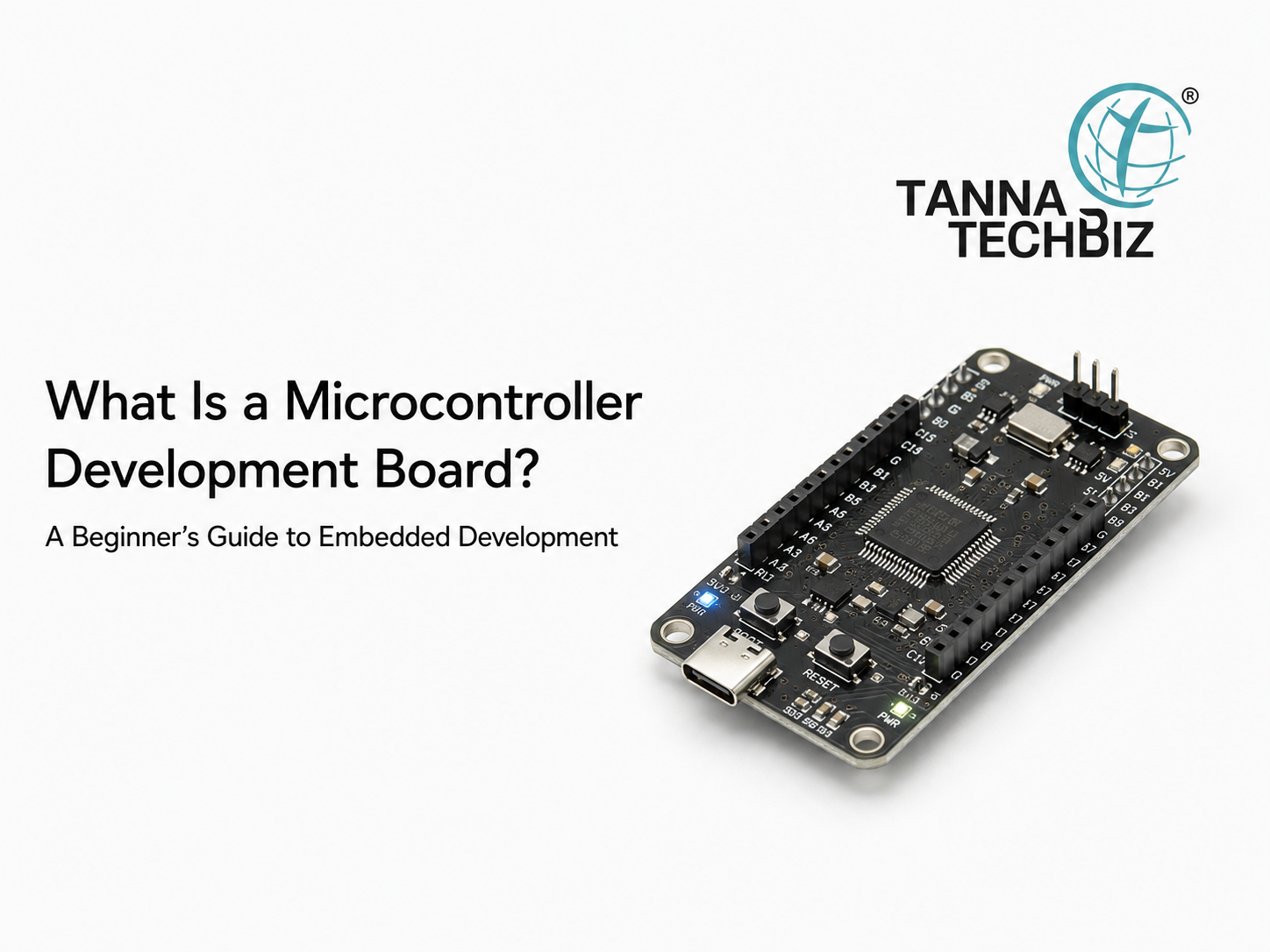
A microcontroller development board combines a microcontroller with useful connections and components that make experimentation easier. Instead of working directly with a bare chip, developers get ports, pins, power connections, and programming interfaces on one board. That makes learning much less intimidating.
A beginner can connect a sensor, upload some code, and see an actual response without needing to design an entire circuit from scratch.
How Does It Help With Embedded Development?
Embedded systems are essentially computers built to perform specific tasks. Unlike a desktop computer that handles dozens of different jobs, an embedded device might simply monitor temperature, control a motor, or switch a light on and off.
An embedded development board gives developers a practical way to build and test these systems before moving toward a finished product.
For example, imagine someone building a smart plant-watering system for the first time. They could connect a soil-moisture sensor to a development board. When the soil gets too dry, the board tells a small pump to switch on. Simple idea. Surprisingly satisfying when it works.
What Can You Build?
The possibilities depend on the board and the microcontroller, but common projects include:
Smart home devices
Temperature monitoring systems
Robotics projects
Motor controllers
Security systems
Wearable electronics
Industrial automation prototypes
IoT devices
This is where development boards become especially useful. You can experiment, make mistakes, change the code, and try again without rebuilding the entire system.
What Does a First Project Feel Like?
A first microcontroller project can be oddly addictive.
Imagine Priya, a college student who bought her first development board after watching a few beginner electronics videos. She expected programming the board to be the hardest part. Instead, connecting the wires correctly gave her more trouble.
After several attempts, she finally got an LED to respond to a button press.
It was a tiny project. But seeing something happen because of code she had written changed how she looked at electronics.
That's often how embedded development begins—not with a complicated machine, but with one small thing that works.
Choosing the Right Board
When selecting a microcontroller development board, look at the processor, available memory, number of input/output pins, connectivity options, programming support, and the type of project you want to build.
Beginners usually benefit from boards with strong documentation and an active developer community. More experienced users may prioritise processing power, wireless connectivity, compact designs, or specialised interfaces.
There isn't one perfect board for everyone. The right choice depends on the project.
Tanna TechBiz provides development boards, embedded computing solutions, AI hardware, and related technology products for students, makers, engineers, and professional developers. Whether you're experimenting with your first embedded project or developing a more advanced system, Tanna TechBiz offers hardware solutions to help turn ideas into working prototypes. Contact us today for more information!

 October 13, 2026