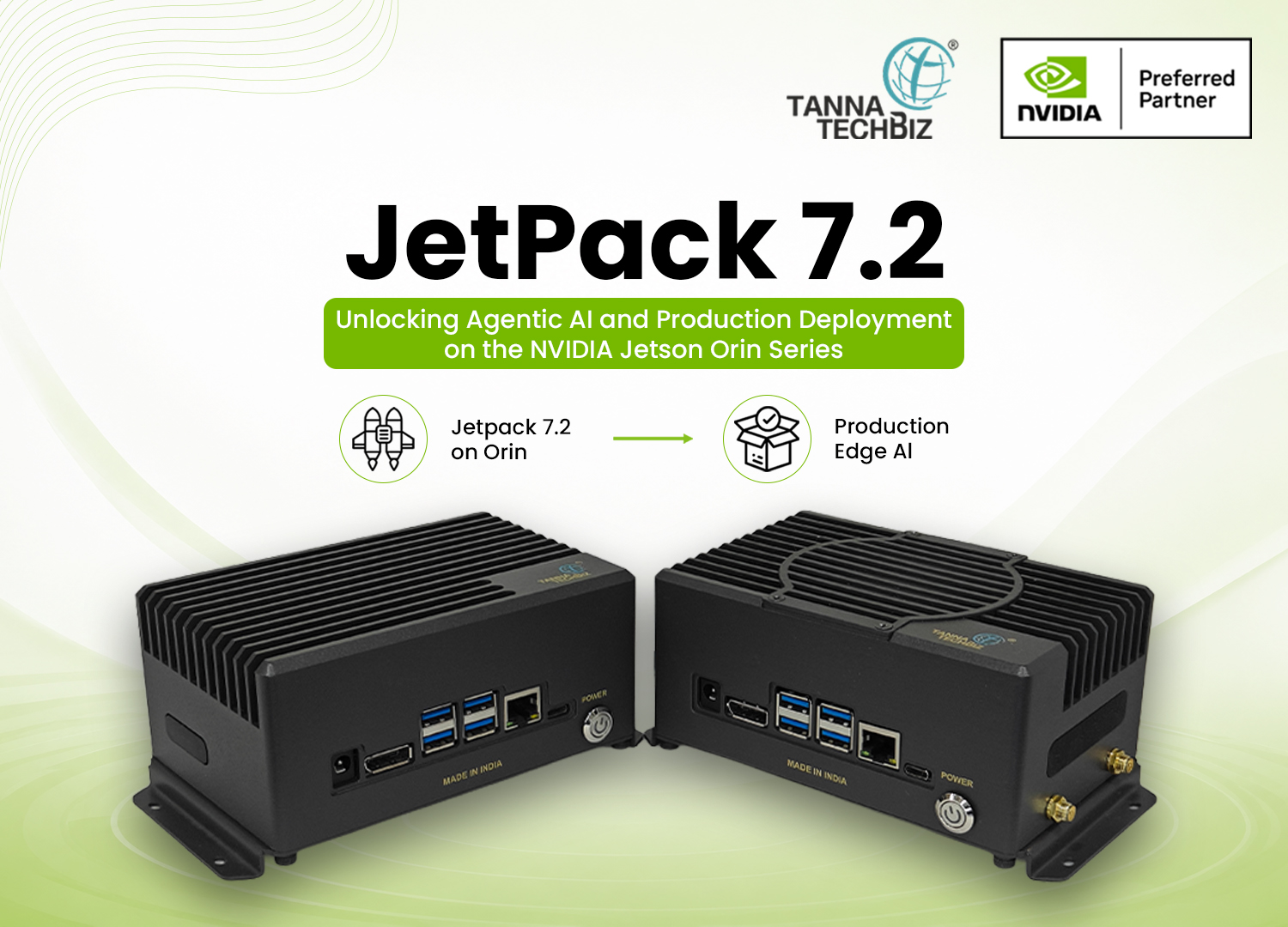
Choosing the rightNvidia Jetson board can get confusing fast. Specs, power limits, memory and AI performance all matter, but it is easy to lose sight of what the project actually needs. When evaluating an Nvidia Development Board to use for robotics, computer vision, or edge AI, the objective is not to pick the strongest option out there. It is about striking the right balance between performance, power, and price point.
The following comparison will minimise the amount of technical jargon to make your decision clear.
Start with the Appropriate Orin Model
Since these boards differ in their performance level, the best choice will depend on the application's demands.
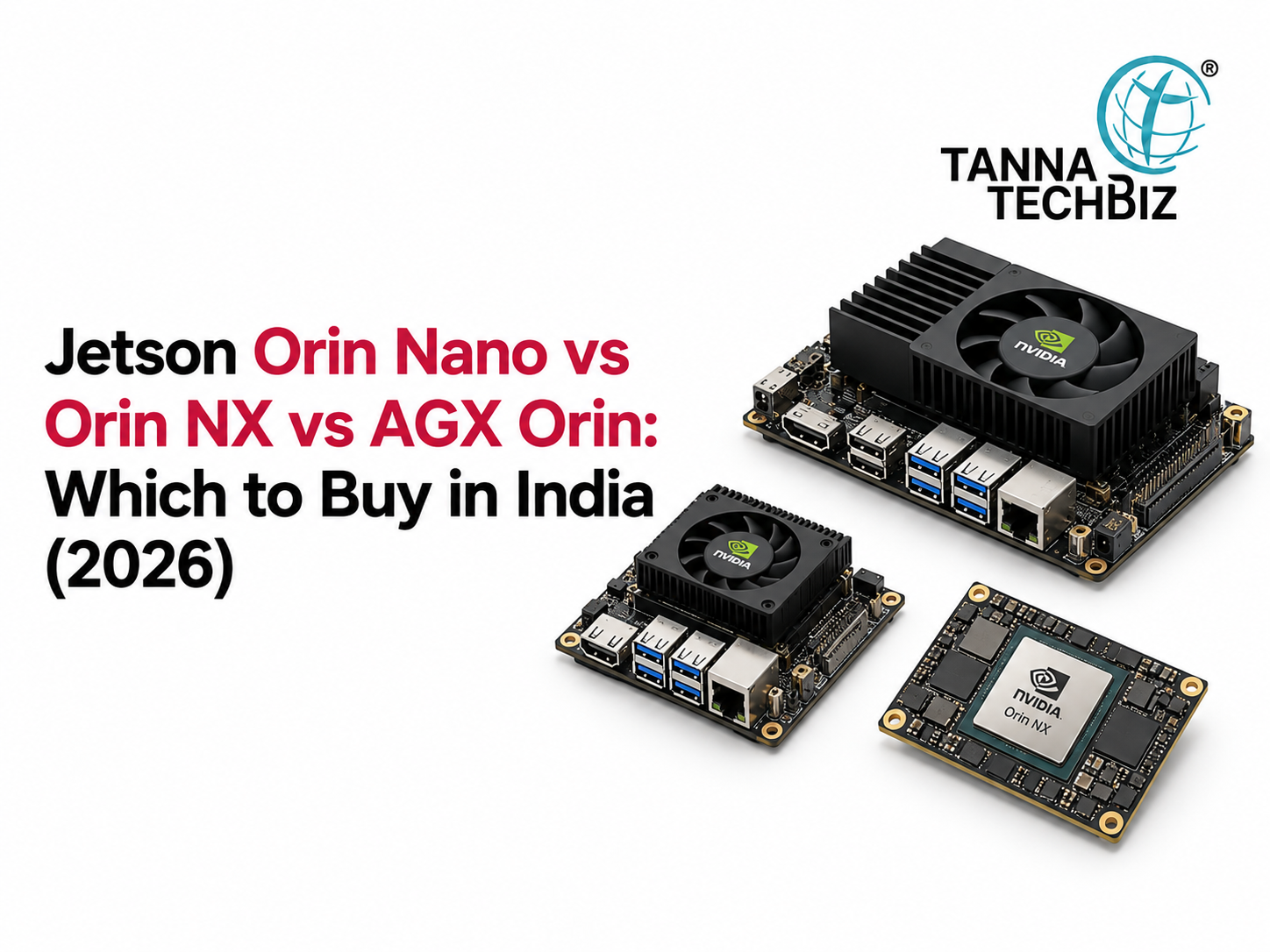
Jetson Orin Nano is an entry-level board, with up to 67 TOPS AI performance and power options of 7W to 25W. It can be used for learning, light robotics, smart cameras, and simple computer vision tasks.
Jetson Orin NX is one level above and offers up to 157 TOPS AI performance. The power range is also a bit higher, 10W to 25W, so it is a more appropriate choice for advanced vision workloads, robotics, autonomous systems, and industrial applications.
AGX Orin is the board with maximum capabilities in this comparison, with up to 275 TOPS AI performance and up to 60W power. It is the best choice when heavy computing power is required, such as in the case of complex robotics and multi-sensor systems.
Compare Performance, Power and Practical Use
Beyond AI TOPS, the board's power consumption matters. It affects thermal management and power design, and in the end, the overall operational cost.
Model
AI Performance
Power Range
Ideal for
Orin Nano
Up to 67 TOPS
7W-25W
Learning, cameras, light robotics
Orin NX
Up to 157 TOPS
10W-25W
Advanced vision, robotics, automation
AGX Orin
Up to 275 TOPS
15W-60W
Heavy AI and complex systems
Which Orin Board Is Suitable for My Budget?
Starting a new project or proving a concept, it is reasonable to start with the Orin Nano. It provides sufficient performance for many edge AI tasks and does not push the hardware requirements.
Going for Orin NX makes sense as the workload grows. It provides a lot more AI performance, while keeping the compact 70 mm x 45 mm module size.
The AGX Orin is more relevant for applications where performance is prioritised over compactness and low power consumption. It also allows for using larger memory configurations.
Avoid Overbuying With the Right Orin Model
If you have ever asked yourself whether it makes sense to buy the board with higher performance, here is the answer: Not necessarily. Extra computing power is required only when the workload is able to use it.
Use Orin Nano for learning and other light tasks. Choose Orin NX for a better performance-power ratio. Get AGX Orin for applications requiring maximum computing capabilities.
Set Up the Optimal Edge AI System for Your Task
The appropriate board should fit the application rather than provide the maximum of available specifications. Memory, software support, cooling, power consumption, and future expandability should also be considered before choosing.
Tanna TechBiz can assist in evaluating different options available for Nvidia boards and recommend the most suitable setup. Contact us to discuss your project and application needs.

 October 13, 2026