Choosing a depth camera for your robotics project can be confusing, especially when two models offer similar features. Both promise accurate depth sensing, motion tracking and support for robotic applications. However, choosing the wrong camera could affect how your robot performs in different environments. Perhaps you're building an indoor delivery robot, an automated inspection system, or a machine that needs to detect obstacles outdoors.
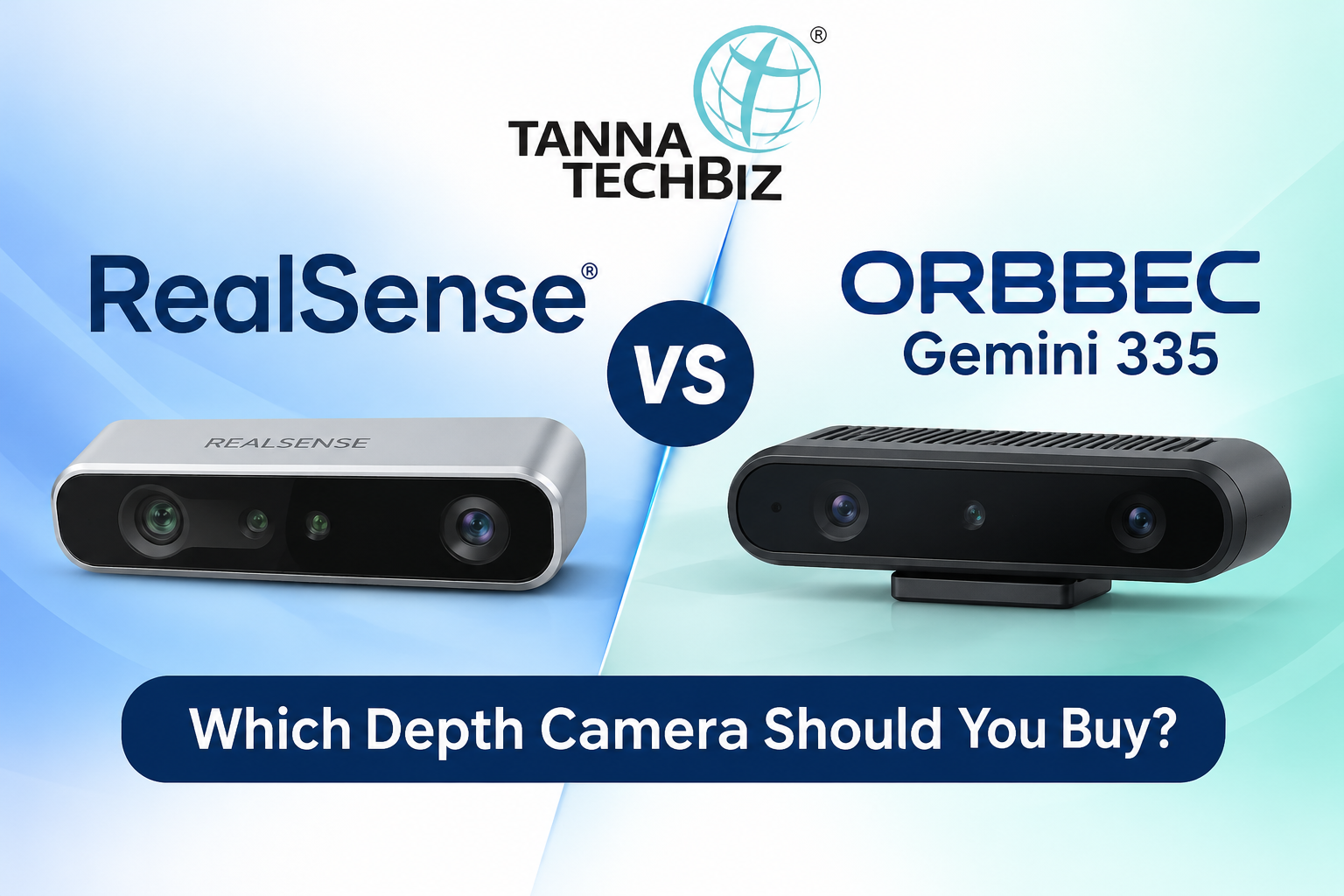
Each project has different requirements and that's where the comparison matters. The ORBBEC Gemini 335 and RealSense D435i are both capable depth cameras, but their strengths differ. Understanding these differences can help you make a more practical buying decision.
Understanding the Features of Each Depth Camera
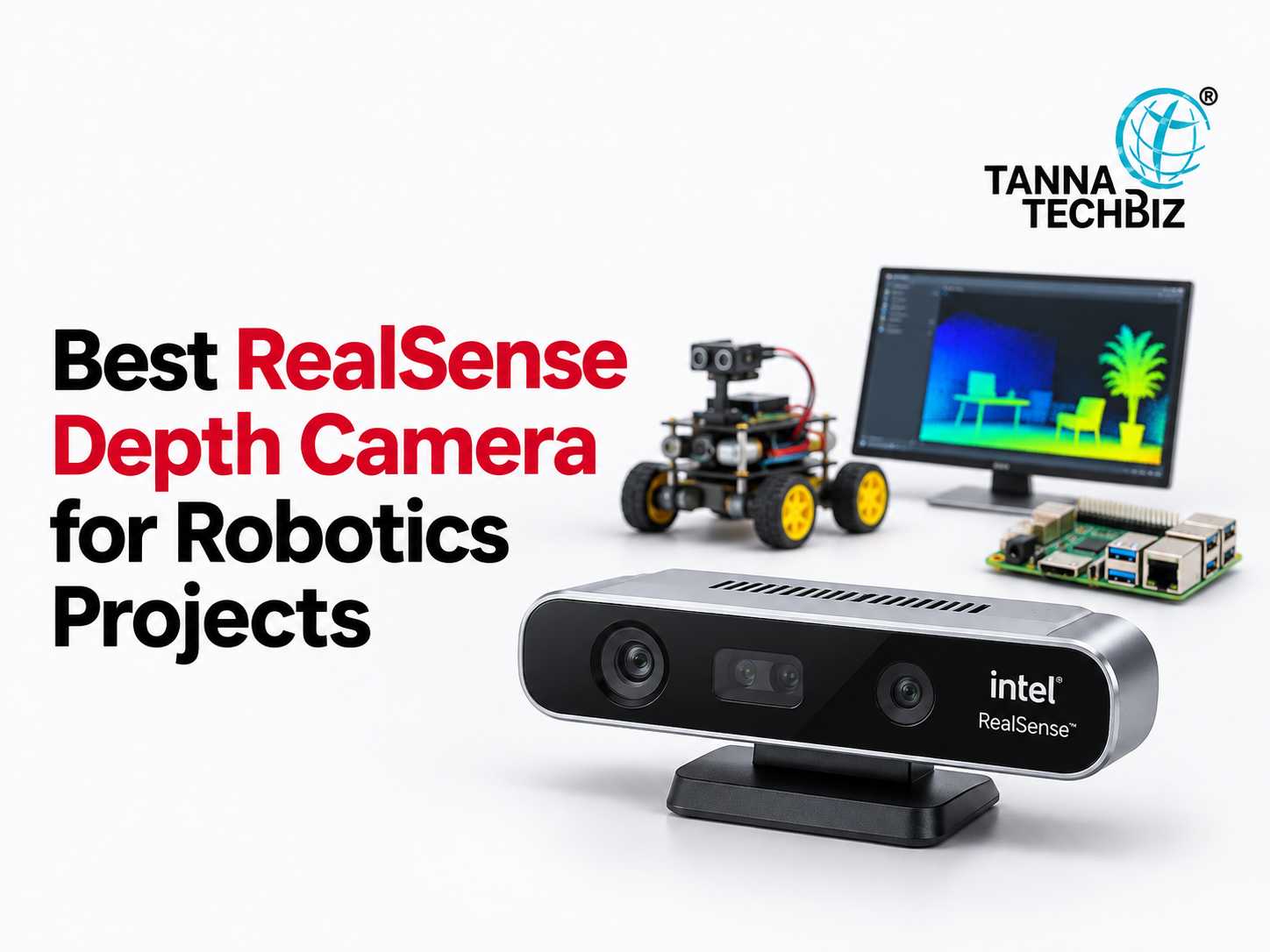
Although both devices use stereo vision to measure distances and create depth maps, they have different capabilities and operating conditions. The ORBBEC Gemini 335 can work in both active and passive stereo mode and has an IMU for motion tracking. In turn, the RealSense D435i has an active stereo depth-sensing capability along with an RGB camera, global-shutter depth sensors and an IMU.
Both devices are suitable for robotics projects, object recognition and mapping tasks. Yet, the proper choice of the device depends on the environment and the distance of the sensing.
Comparison of Depth Range and Image Quality
A depth range is one of the essential criteria in choosing a depth camera. While the Gemini 335 claims to have a sensing range from 0.10 m to over 20 m with an optimum of 0.26–3 m, the RealSense D435i has a working range of about 0.3–3 m.
The depth resolution and image capture of the ORBBEC Gemini 335 is up to 1280 × 800 @ 30 fps, while the D435i allows 1280 × 720 @ 30 fps. Besides, the depth field of view of the Gemini 335 is 90 × 65 degrees, which is greater than the 87 × 58 degrees of the D435i.
Outdoor Use and Lighting Conditions
The lighting of the environment affects the performance of a depth camera. When it comes to projects located near the outdoor entrance with changing light during the day, the ORBBEC Gemini 335 can operate in low light and outdoor modes and has IP5X dust resistance that might be useful in some industrial applications.
In contrast, the RealSense D435iis a perfect option for indoor robotics and short-distance sensing. In particular, the global shutter depth sensors allow avoiding distortions that occur due to motion.
Therefore, before purchasing, a comprehensive decision should consider both the ambient lighting and the environment where a robot will operate.
Software Support and Robotics Applications
Hardware is important, but software plays a key role sometimes. The RealSense D435i works with popular robotics software, such as ROS, ROS 2, Python and Jetson platforms. It has a well-developed developer community that makes integration easy. In turn, the ORBBEC Gemini 335 uses its own SDK and outputs depth maps, point clouds, infrared and RGB images via USB 3.0 Type-C. Both devices have IMUs that allow navigation, motion tracking and SLAM.
Choosing a Depth Camera Suitable for the Project
It is necessary to choose the ORBBEC Gemini 335 if the field of view or dust protection is needed, or if the device has to work in various lighting conditions. Moreover, the extended depth range of the device may be an advantage for some outdoor projects. On the other hand, the RealSense D435i can be a good choice for indoor mobile robots, robotic arms and AI vision projects.
In any case, no camera fits all projects. Thus, it is necessary to consider the environment where a robot will work, the distance of sensing and the software requirements.
Positioning of Depth Cameras in the Portfolio of Tanna TechBiz
Both the devices discussed above offer unique advantages for developing robotics projects. The choice starts with knowing the requirements of the project. Tanna TechBiz specialises in depth cameras, embedded AI hardware and robotics components and its specialists can recommend the right sensors for your application.

 November 26, 2026