Starting your first electronics project should feel exciting. Yet, choosing the board can quickly turn that excitement into confusion. Raspberry Pi and Arduino are equally common starting platforms, but they serve completely different purposes. So you will have difficulties building your project if you choose the wrong one.
Luckily, it becomes much easier when you concentrate on the project itself. If you need computing flexibility in software, Raspberry Pi will be the best option. Otherwise, choose Arduino if you need to control sensors, motors, and other electronic components.
Raspberry Pi is More Like a Small Computer
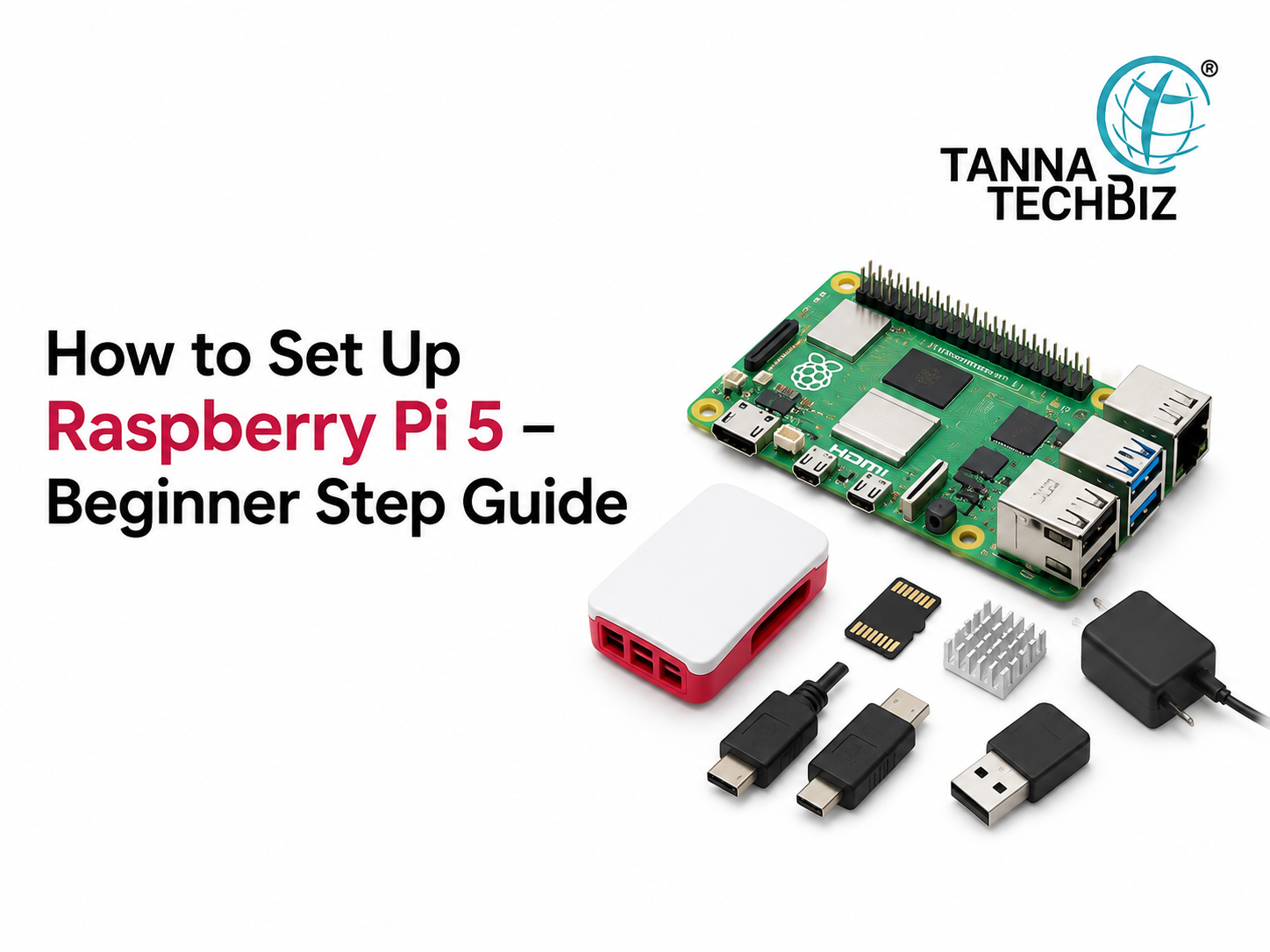
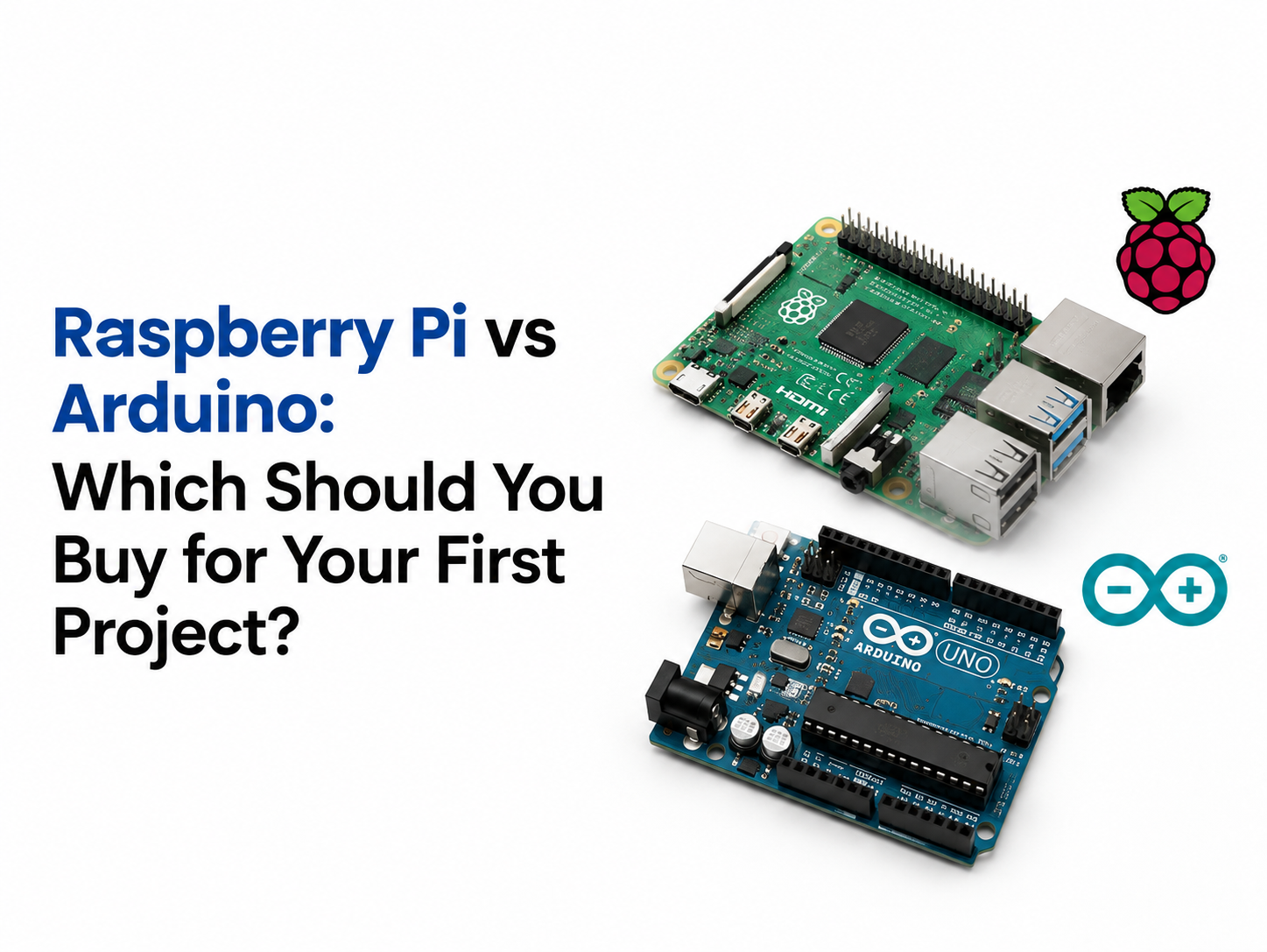
Raspberry Pi is a single-board computer that can be connected to a display, keyboard, mouse, memory, and other peripherals and run an operating system like a regular desktop computer.
It can be used for programming, web development, cameras, media players, home automation, web server, IoT, and other tasks. It supports Python, Scratch, C, and C++.
However, remember to consider the cost of the complete system. Depending on your project, necessary Raspberry Pi accessories include a power supply, microSD card, case, cooling, and HDMI cable.
Arduino Allows Direct Hardware Control
Unlike Raspberry Pi, Arduino is a microcontroller board. It has to be connected to different electronic components and run a program uploaded to it, usually referred to as a sketch.
So you can connect sensors, buttons, LEDs, motors, buzzers, relays, displays and other components. It is suitable for creating simple robots, automatic plant watering, alarm systems, smart lights and wearable electronics.
Raspberry Pi vs Arduino: Get to Know Them in One Table
Here is a quick overview that will help you distinguish these two boards by their features.
Factor
Raspberry Pi
Arduino
Main role
Small computer
Microcontroller
Strong point
Software, networking and multimedia
Direct hardware control
Setup
Power, storage and operating system
Connect components and upload a sketch
Good for
Cameras, web projects and connected devices
Sensors, motors and simple electronics
Which One Is Simpler for the First Project?
If you are trying to understand circuits, LEDs, sensors, motors, buttons, and other components, you can use Arduino to work with them and see the effect in real life by connecting a component and uploading your sketch.
With Raspberry Pi, you have to set up the whole system, including an operating system. However, if you want to learn Linux, networks, displays, cameras or web applications, Raspberry Pi could be a more interesting option.
Power Needs Could Change Your Choice Too
Arduino usually requires less power and is more suitable for portable electronics and battery-operated sensors.
Raspberry Pi behaves as a computer and requires a good power setup. So, think about your storage, power supply, cables and other Raspberry Pi accessories before starting the project.
Make the Building Simpler
Arduino is the right choice if you want something simpler, less power-consuming and having direct access to hardware components.
Raspberry Pi is the right option if you need networking, multimedia, an operating system, more advanced software or programming.
Remarkably, you can use them together later. Arduino will be responsible for hardware control and Raspberry Pi will process data or connect to the internet.
Ready to build your first project? Tanna TechBiz will help you discover the right components and Raspberry Pi accessories for your project.

 October 20, 2026